

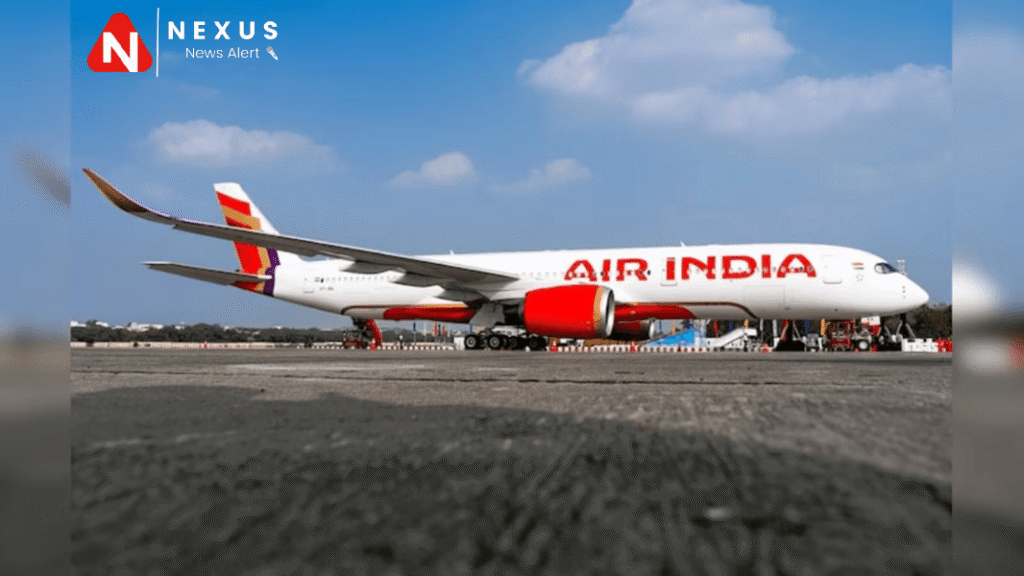
Nexus News Alert | New Delhi, 27 May 2026 — A major Air India flight from Delhi to San Francisco was forced to return to the Indian capital after flying for nearly nine hours due to a critical technical issue. The Boeing 777 aircraft carrying around 250 passengers and crew turned back when its Traffic Collision Avoidance System (TCAS) malfunctioned, triggering safety protocols over the North Atlantic route.
This Air India Delhi San Francisco Flight Returns incident has once again put the spotlight on technical reliability and operational challenges faced by the national carrier, which is already navigating financial difficulties.
Details of the Air India Delhi San Francisco Flight Returns Incident
The flight AI 173 departed from Delhi’s Indira Gandhi International Airport at 3:09 AM on Wednesday. After covering a significant portion of its journey and entering Chinese airspace, the pilots noticed the TCAS was not functioning properly. Since a working TCAS is mandatory for flights over the busy North Atlantic oceanic region, the crew decided to return to Delhi.
The aircraft landed safely back at Delhi airport shortly after noon. Air India promptly issued a statement assuring passengers that all safety protocols were followed and alternative arrangements were being made.
Also Read: SEO Poisoning Attack Distributes Fake Gemini
What is TCAS and Why It Matters
TCAS (Traffic Collision Avoidance System) is a crucial onboard safety equipment that allows aircraft to “talk” to each other and automatically avoid mid-air collisions. It is mandatory for all commercial flights operating above 29,000 feet globally. Certain regions, including parts of Europe and the Middle East, have stricter requirements where aircraft without functional TCAS are not permitted to fly at any altitude.
Senior pilots explained that without a reliable TCAS, continuing the journey would have violated international aviation safety norms, leaving the airline with no choice but to turn back.
Impact on Passengers and Operations
Passengers on board the Air India Delhi San Francisco Flight Returns endured a long and unexpected journey. Many had been in the air for nearly nine hours before returning to their starting point. Air India said ground teams were providing refreshments, hotel accommodation, and rebooking options to minimise inconvenience.
Also Read:Quad Foreign Ministers Meeting 2026: US Announces
The Boeing 777 is a fuel-intensive wide-body aircraft that burns approximately 8-9 tonnes of fuel per hour. This return journey is estimated to have caused significant fuel wastage at a time when global oil prices remain high and the Indian rupee is under pressure.
This is not the first such incident for Air India in recent months. In March 2026, another Vancouver-bound Boeing 777-200LR had to return to Delhi after almost nine hours due to an aircraft version mismatch. Such repeated technical issues are raising concerns about fleet reliability as the airline tries to cut costs following heavy losses in the previous fiscal year.
Air India’s Response and Future Plans
In its official statement, Air India said:
“AI 173 from Delhi to San Francisco on May 27 has returned to Delhi due to a technical issue in accordance with the laid down procedures. The aircraft landed safely and will undergo technical inspection in line with Air India’s safety standards. We regret the inconvenience caused to the passengers and are making alternative arrangements to fly them to their destination as soon as possible.”
The airline emphasised that passenger safety remains its highest priority. The aircraft will now undergo thorough technical checks before being cleared for service again.
Broader Context of Aviation Safety in India
The Air India Delhi San Francisco Flight Returns incident comes amid growing scrutiny of India’s aviation sector. While Indian airlines have maintained a strong safety record overall, technical glitches and operational disruptions have increased in frequency as carriers expand routes and fleets rapidly.
Aviation experts note that long-haul flights to the US West Coast are particularly demanding due to the extended duration and complex airspace requirements. Reliable onboard systems like TCAS are non-negotiable for such operations.
What Passengers Should Know
For travellers booked on long-haul international flights, this incident serves as a reminder to:
- Stay calm and follow crew instructions during any technical diversion
- Keep essential items (medication, documents, chargers) in carry-on luggage
- Check airline updates regularly during disruptions
- Understand that safety decisions always take priority over schedule
Air India has assured full support to affected passengers, including hotel stays and rebooking on the earliest available flights.
Nexus News Alert Verdict
The Air India Delhi San Francisco Flight Returns highlights the challenges of maintaining a large long-haul fleet while managing costs. Although the aircraft returned safely, the nine-hour diversion caused significant inconvenience and financial loss. As India’s aviation market grows rapidly, airlines must prioritise robust technical maintenance and proactive risk management to prevent such incidents.
This event also underscores the critical importance of systems like TCAS in modern aviation. Passenger safety should always remain the top priority, even if it means delaying journeys.
Stay tuned with Nexus News Alert for the latest updates on this Air India Delhi San Francisco Flight Returns incident, aviation news, flight status, and more from the Indian aviation sector.