

Nexus News Alert | New Delhi, 28 May 2026 — US President Donald Trump has issued a stark warning to longtime ally Oman, threatening military action if the Gulf nation gets involved in any arrangement with Iran over control of the Strait of Hormuz. The dramatic Trump Threatens Oman statement has sent shockwaves across the Middle East and raised fresh concerns about the stability of the fragile ceasefire in the ongoing US-Iran war.
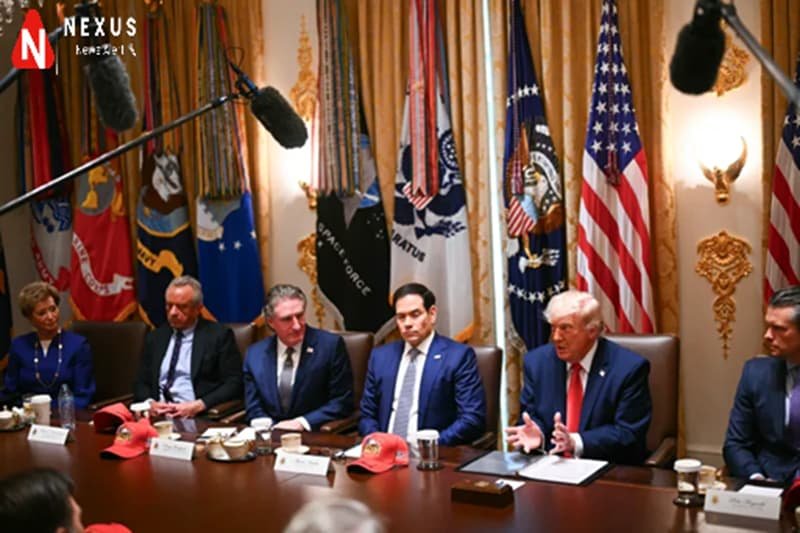
Trump made the remarks during a cabinet meeting at the White House, responding to reports that Oman was in talks with Iran about jointly overseeing shipping through the critical waterway. The Trump Threatens Oman comment has been widely interpreted as a strong signal that Washington will not tolerate any move that could legitimise Iranian influence over global oil routes.
Also Read : WHO Declares Ebola Outbreak Global Health Emergency: India
What Trump Said About Oman and Hormuz
During the meeting, when asked about the possibility of Oman and Iran overseeing trade through the Strait of Hormuz, Trump replied: “Nobody is going to control it. It’s international waters, and Oman will behave just like everybody else, or we will have to blow them up.”
The statement was later shared by the US Department of State on social media with an official transcript, confirming that the US president specifically referred to Oman. This has surprised many observers, given Oman’s long-standing role as a neutral mediator between the US and Iran.
Also Explore > https://mycouponsnexus.com/ for best coupon deals
Background of the Hormuz Dispute
The Strait of Hormuz is one of the world’s most vital maritime chokepoints, handling more than 20% of global oil traffic. Most of the strait lies within Iranian and Omani territorial waters, though it has functioned as a free international route for decades.
Following US-Israeli strikes on Iran in late February 2026, Tehran closed the strait and began asserting greater control, including charging high fees for passage. This move disrupted global energy supplies and escalated tensions. Iran has since claimed progress in talks with Oman for joint oversight, framing payments as “service fees” rather than tolls.
The Trump Threatens Oman remark appears aimed at preventing any formal Iran-Oman arrangement that could permanently alter the status of the strait after the war.
Oman’s Role in the US-Iran Conflict
Oman has maintained close ties with both Washington and Tehran for decades. Omani Foreign Minister Badr Albusaidi played a key mediation role in nuclear talks before the war began. Despite not hosting US military bases like some other Gulf states, Oman was still affected when Iranian attacks hit the Duqm commercial port in early March.
Analysts say Oman’s unique position — trusted by both sides — makes it valuable as a mediator but vulnerable in wartime. The Trump Threatens Oman statement puts Muscat in a difficult spot, forcing it to balance relations with its powerful neighbour Iran and its long-time security partner, the United States.
International Reactions to Trump Threatens Oman
The threat has drawn sharp criticism from several quarters:
- Rights groups described it as reckless and against international law.
- Regional experts called it a “mafia boss” style warning that undermines diplomatic norms.
- Iran expressed solidarity with Oman, stating it stands with Muscat against US threats.
Many observers note that bombing a small US ally like Oman would not necessarily change Iran’s calculus on Hormuz but could further destabilise the entire Gulf region.
Current Status of US-Iran Peace Talks
Despite the ceasefire announced on April 8, military flare-ups continue. Recent incidents include Iranian strikes on US assets and US defensive actions near Bandar Abbas. Negotiations mediated by Pakistan have been difficult, with both sides exchanging proposals but failing to reach a lasting agreement.
Trump has also linked peace talks to broader regional demands, including normalisation with Israel under the Abraham Accords — a move analysts say is highly unlikely without progress on Palestinian statehood.
Strategic Importance of the Strait of Hormuz
Control over Hormuz remains the central flashpoint:
- Iran wants to maintain leverage through its geographic position.
- The US insists on freedom of navigation and rejects any toll system.
- Oman finds itself caught in the middle, preferring mediation over confrontation.
The Trump Threatens Oman episode highlights how the Hormuz dispute has evolved from a bilateral US-Iran issue into a broader geopolitical struggle involving multiple Gulf states.
Nexus News Alert Verdict
The Trump Threatens Oman statement is a significant escalation in rhetoric that reflects Washington’s determination to prevent any post-war normalisation of Iranian control over the Strait of Hormuz. While the immediate ceasefire holds, repeated flare-ups and tough negotiating positions suggest a long and difficult road to lasting peace.
Oman’s role as a trusted interlocutor is being tested like never before. How Muscat responds — and how the US balances threats with diplomacy — will likely shape the next phase of this complex conflict.
For the global economy, any prolonged disruption in Hormuz remains a serious risk. Energy markets are already volatile, and further instability could drive oil prices even higher.
The coming days will be critical as all parties assess the implications of the Trump Threatens Oman warning and work behind the scenes to prevent a wider regional war.
Stay tuned with Nexus News Alert for continuous updates on the US-Iran war, developments in the Strait of Hormuz, diplomatic efforts, and all major geopolitical stories from the Middle East.