

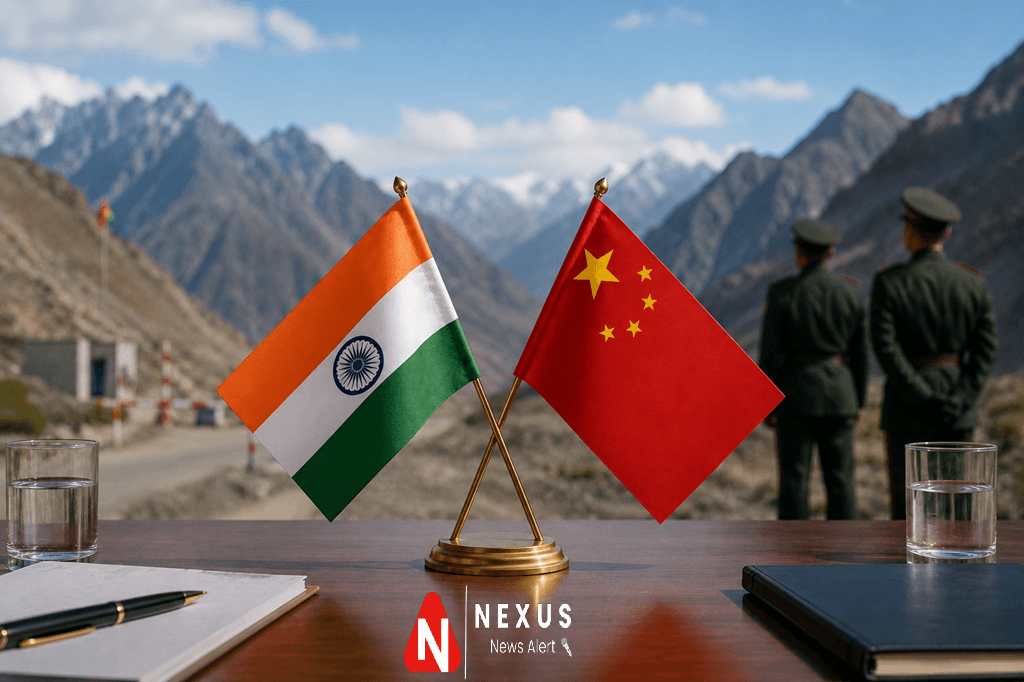
India-China relations have always been a complex mix of cooperation, competition, and caution. After the 2020 Galwan clash that strained ties for years, both countries have taken significant steps toward normalization since late 2024. This guide explains the latest diplomatic developments in India China relations, key meetings, border progress, economic ties, and what it means for the future.
Historical Background of India-China Relations
India and China share a 3,488 km border, much of which remains disputed. The Line of Actual Control (LAC) has been the flashpoint for decades. The 1962 war, multiple standoffs, and the deadly 2020 Galwan Valley incident marked low points. Despite this, both nations are economic giants and key BRICS players. Bilateral trade crossed $135+ billion in recent years, making economic interdependence a stabilizing factor.
Key Challenges:
- Border disputes in Ladakh and Arunachal Pradesh
- Trade imbalances
- Geopolitical rivalry in the Indo-Pacific
- Differences on issues like Pakistan, Tibet, and global forums
Major Turning Point: 2024 Border Agreement
The real thaw began in October 2024 with a breakthrough disengagement agreement covering Depsang and Demchok — the last major friction points after 2020. This restored patrolling rights and reduced troop deployments.
Also Read: Gold Price Today in India: Latest City Wise Rates (1 June 2026)
This agreement paved the way for:
- Restart of Special Representatives dialogue (after 5 years)
- Resumption of people-to-people contacts
Latest Diplomatic Developments in 2025-2026
High-Level Leadership Engagements
- PM Narendra Modi and President Xi Jinping met on the sidelines of the 2024 BRICS Summit in Kazan.
- Modi’s visit to Tianjin for the SCO Summit in August 2025 — first Indian PM visit to China in years.
- Multiple ministerial visits, including External Affairs Minister S. Jaishankar and Defence Minister visits.
Border and Military Talks Progress
The 35th Working Mechanism for Consultation and Coordination (WMCC) meeting in Beijing (May 2026) was described as “constructive and forward-looking.” Both sides emphasized that peace along the LAC is essential for overall normalization.
| Key Border Developments | Date | Outcome |
|---|---|---|
| Depsang & Demchok Disengagement | Oct 2024 | Patrolling rights restored, troops pulled back |
| 24th Special Representatives Meeting | Dec 2024 | Dialogue restarted after 5-year gap |
| Modi-Xi Tianjin Meeting | Aug 2025 | Commitment to "partners, not rivals" |
| 35th WMCC Meeting | May 2026 | Discussions on delimitation & management |
| Ongoing Corps Commander Talks | 2025-26 | Focus on buffer zones and confidence building |
Economic and Connectivity Measures
- China lifted restrictions on key exports (fertilizers, rare earths, tunnel boring machines).
- India relaxed some investment rules under Press Note 3.
- Direct flights resumed after 5 years.
- Tourist visas restarted and Kailash-Manasarovar Yatra revived.
Comparison Table: Pre-2024 vs Post-2024 Situation
| Aspect | Pre-2024 (2020-2024) | Post-2024 (2025-2026) |
|---|---|---|
| Border Situation | Multiple friction points | Major disengagement completed |
| High-Level Visits | Almost frozen | Multiple summits and bilateral meets |
| Direct Flights | Suspended | Resumed |
| Trade Restrictions | High | Gradually easing |
| People-to-People Ties | Severely limited | Improving (visas, yatra) |
Current Status of India China Relations (June 2026)
Relations are in a phase of cautious normalization. Experts describe it as "tactical thaw" rather than strategic reset. Both sides continue to guard core interests — India on border security and Quad partnerships, China on its regional influence.
Positive momentum includes:
- Record trade figures in some sectors
- Cooperation in BRICS and SCO
- Regular diplomatic dialogues
Challenges that remain:
- Trust deficit on border issues
- India’s concerns over Chinese infrastructure in disputed areas
- Broader strategic competition
Why These Developments Matter
Stable India-China relations benefit not just the two countries but the entire region and Global South. Reduced border tensions free up resources for development. Improved trade can boost economies. However, sustainable peace depends on resolving the boundary question and managing differences maturely.
FAQs on India China Relations Latest Developments
Q1. What is the current status of India China border dispute in 2026?
Most friction points along the LAC have seen disengagement. Talks on delimitation and management continue through diplomatic and military channels. Peace and tranquility remain the guiding principle.
Q2. Has PM Modi met President Xi recently?
Yes. Key meetings happened at BRICS 2024 and SCO Summit in Tianjin (August 2025). More engagements are expected, especially with India hosting BRICS in 2026.
Q3. Are direct flights between India and China operational?
Yes, several routes have resumed since late 2025, improving connectivity significantly.
Q4. Is trade between India and China improving?
Trade has shown recovery with some restrictions eased. However, India continues to focus on reducing dependency in critical sectors.
Q5. Will India China relations improve further in 2026?
Experts expect continued engagement, especially around multilateral forums. Much depends on sustained border peace and practical cooperation.
Q6. What is India's approach toward China now?
India follows a policy of engagement while maintaining strategic autonomy, strong border infrastructure, and diversified partnerships.
Conclusion: A Pragmatic Path Forward
The latest diplomatic developments in India China relations show a clear shift from confrontation to managed competition with elements of cooperation. The 2024 border agreement acted as a foundation, and 2025-2026 has seen steady implementation through high-level diplomacy and practical measures.
While challenges persist, both nations appear committed to preventing differences from escalating into conflict. For India, the focus remains on protecting sovereignty while exploring economic opportunities. Long-term stability will depend on honest dialogue, mutual respect, and concrete confidence-building measures.
As India hosts BRICS in 2026, it could provide another platform to further stabilize and shape this crucial bilateral relationship. Regular updates and fresh content will be added as new developments emerge.
Stay informed with reliable sources and follow official government statements for the most accurate picture of India China relations.