


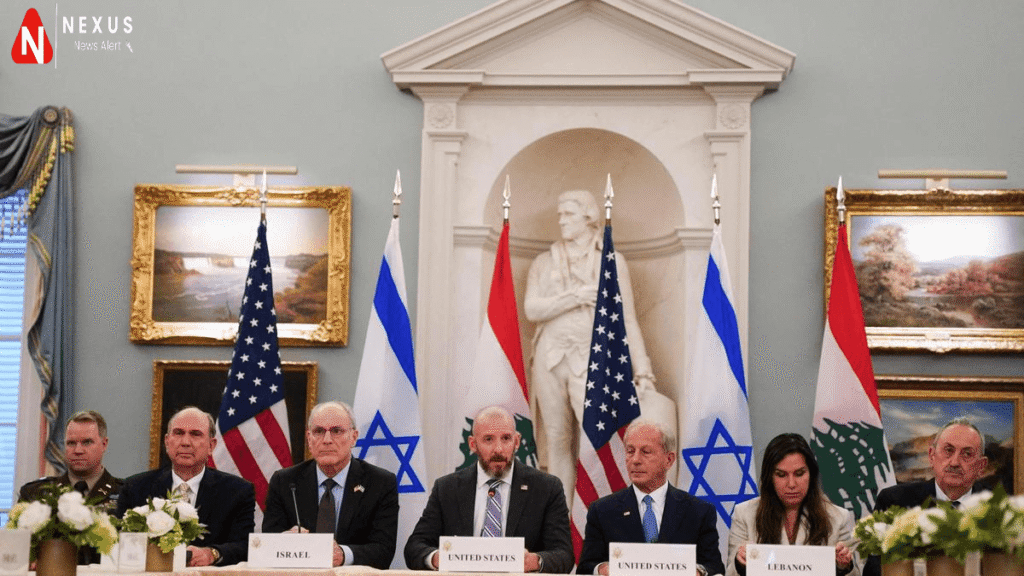
Nexus News Alert | New Delhi, 4 June 2026 — In a significant development in the West Asia War, Israel and Lebanon have agreed to implement a ceasefire following US-led talks in Washington. The agreement comes amid continued tensions, with both sides emphasising the need for a complete halt to hostilities involving Iran-backed Hezbollah. US President Donald Trump has expressed optimism about separating Lebanon talks from the larger conflict with Iran, but Tehran has warned that any attack on Beirut could trigger a full-scale resumption of the West Asia War.
The joint statement issued after the talks marks a potential breakthrough in efforts to de-escalate violence that has gripped the region for months. However, fresh incidents and conflicting statements suggest the path to lasting peace remains challenging.
Also Read : Stress and Brain Stroke: Can Chronic Stress Really Trigger
Key Points of the Israel-Lebanon Ceasefire Agreement
| Aspect | Details |
|---|---|
| Ceasefire Condition | Complete cessation of fire by Hezbollah |
| Pilot Zones | Lebanese army to take exclusive control |
| Non-State Actors | Evacuation of Hezbollah operatives from south Lebanon |
| US Role | Facilitated talks in Washington |
The agreement requires Hezbollah to withdraw its forces from southern Lebanon, allowing the Lebanese armed forces to assume full control. This is seen as a critical step toward stabilising the border region.
Trump’s Position on the West Asia War
President Trump has indicated he wants to separate negotiations on Lebanon from the broader West Asia War with Iran. He told reporters it could lead to a deal “over the weekend.” However, Iranian Foreign Minister Abbas Araghchi has linked the conflicts, warning that any attack on Beirut would trigger a “full-scale resumption” of the West Asia War.
Trump’s administration continues to push for a comprehensive agreement while maintaining pressure through targeted actions. The US House of Representatives recently passed a resolution seeking to curb the president’s war powers, reflecting domestic divisions over the ongoing conflict.
Also Read : WHO Declares Ebola Outbreak Global Health Emergency: India Says No Need to Panic
Recent Developments in the West Asia War
- Israeli strikes in southern Lebanon killed at least eight people, according to Lebanese civil defence.
- Iran reported attacks on US assets, while the US described its actions as defensive.
- Oil prices eased slightly after the ceasefire announcement but remain volatile due to uncertainty over the Strait of Hormuz.
- Kuwait reported an Iranian drone strike on its international airport, killing one person.
These incidents highlight how fragile the current situation remains despite diplomatic efforts.
Oil Market Reaction to West Asia War Developments
Oil prices fell on Thursday as the Israel-Lebanon ceasefire raised hopes for a broader deal. Brent futures dropped below $97 per barrel, while WTI crude also eased. However, analysts warn that any breakdown in talks could quickly push prices higher again, given the strategic importance of the Strait of Hormuz.
International Reactions
The West Asia War has drawn concern from global powers. Many countries are urging all parties to respect the ceasefire and return to meaningful dialogue. The UN and several European nations have called for an immediate de-escalation to prevent further civilian casualties.
What Lies Ahead in the West Asia War
The coming days will be critical. If the ceasefire holds and Hezbollah complies with the withdrawal terms, it could open the door for wider negotiations involving Iran. However, repeated flare-ups and hardline positions from multiple sides suggest the road to peace will not be easy.
For the people of Lebanon and the wider region, an end to violence cannot come soon enough. The West Asia War has already caused immense suffering, and a sustainable resolution is urgently needed.
10 FAQs on the West Asia War
Q1. What is the latest development in the West Asia War?
A: Israel and Lebanon have agreed to a ceasefire with conditions on Hezbollah.
Q2. What did Trump say about separating Lebanon and Iran talks?
A: He wants to handle them separately but remains optimistic about a deal.
Q3. How has Iran responded to the ceasefire?
A: Tehran insists the conflicts are linked and warns against attacks on Beirut.
Q4. What is the situation in the Strait of Hormuz?
A: Tensions remain high with occasional incidents affecting shipping.
Q5. How are oil prices reacting to the West Asia War?
A: Prices eased after the ceasefire announcement but stay volatile.
Q6. What role is the US playing?
A: The US is facilitating talks while conducting defensive operations.
Q7. Has the US House taken any action?
A: Yes, it passed a resolution seeking to limit Trump’s war powers.
Q8. What is the condition for the Israel-Lebanon ceasefire?
A: Complete cessation of fire by Hezbollah and withdrawal from southern Lebanon.
Q9. How many people have been affected in recent strikes?
A: Multiple incidents have caused civilian and military casualties on both sides.
Q10. What is the global concern regarding the West Asia War?
A: Risk of wider regional instability and impact on global energy supplies.
Nexus News Alert Verdict
The agreement between Israel and Lebanon offers a ray of hope amid the ongoing West Asia War, but deep divisions and recent flare-ups show how fragile the situation remains. Trump’s push for a broader deal with Iran will be the real test in the coming weeks. For millions affected by the conflict, sustained diplomacy and strict adherence to ceasefire terms are the only path forward.
The West Asia War has already reshaped regional dynamics. Its resolution will have far-reaching consequences for global energy security, international relations, and the future stability of the Middle East.
Stay tuned with Nexus News Alert for continuous live updates on the West Asia War, Israel-Lebanon ceasefire developments, US-Iran negotiations, and all major geopolitical stories from the region.