


By Nexus News Alert Desk
Last Updated: 23 June 2026
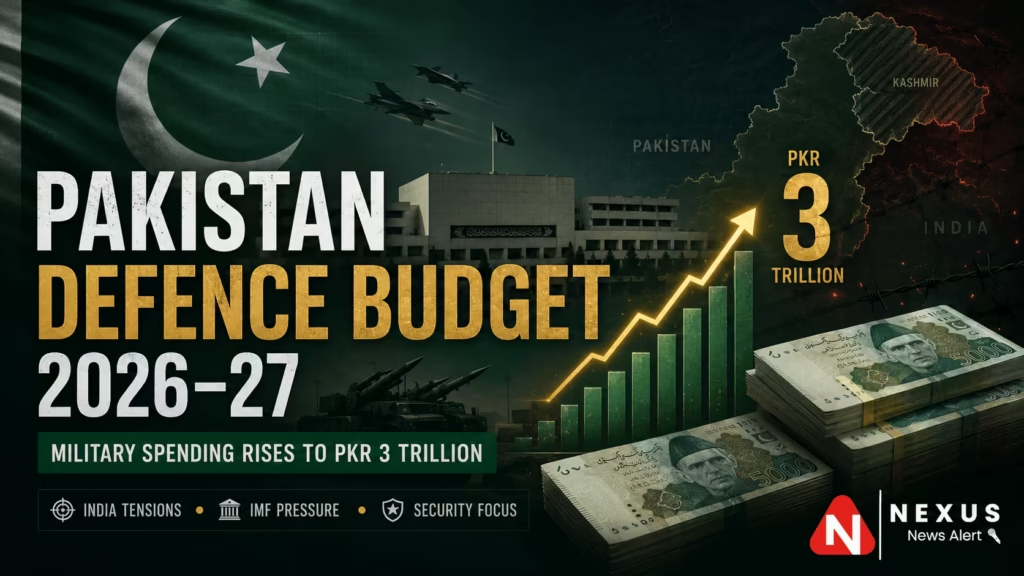
The Pakistan defence budget 2026–27 has become a major point of discussion in South Asia after Islamabad proposed around PKR 3 trillion for defence services. The increase comes at a time when Pakistan is dealing with regional security concerns, pressure on its economy, IMF-linked reforms and continuing tension with India.
The Pakistan defence budget 2026–27 is not only a military story. It is also an economic story because the government is increasing security spending while trying to control fiscal pressure and meet revenue targets.
Also Read : Qatar Ras Laffan Blast: 13 Dead, 12 Indians Among Victims
Pakistan Defence Budget 2026–27: What We Know So Far
According to available budget and media updates:
- Pakistan has allocated around PKR 3 trillion for defence services.
- The increase is around 17–18% compared with the previous allocation.
- The total federal budget size is around PKR 18.77 trillion.
- Development spending has been kept under pressure.
- Pakistan is also trying to stay aligned with IMF programme requirements.
- The budget comes after a tense regional security environment.
- India will closely watch the direction of Pakistan’s military spending.
The Pakistan defence budget 2026–27 shows that security remains one of Islamabad’s top priorities even when the economy is under stress.
Also Read : Pakistan Strikes Kill 11 Children in Afghanistan, Taliban Claims
Why Defence Spending Has Increased
Pakistan has cited regional security and internal security challenges as major reasons behind higher defence allocation. The country continues to face pressure along different borders, including the India front and the Afghanistan side.
The Pakistan defence budget 2026–27 also comes after a period of heightened India-Pakistan tensions. In South Asia, defence spending by one country is closely watched by the other because it can affect military planning, diplomatic messaging and regional stability.
However, a higher defence budget does not always mean immediate escalation. Defence spending also includes salaries, pensions-related support, fuel, maintenance, training, infrastructure, equipment and operational costs.
India Angle: Why New Delhi Will Watch Closely
For India, the Pakistan defence budget 2026–27 matters because Pakistan remains a key security concern. Any increase in military spending can influence how Indian defence analysts assess regional preparedness.
India will likely watch three things closely:
- Whether Pakistan uses the allocation for military modernisation
- Whether spending goes mainly into salaries and operations
- Whether new procurement or border deployment signals emerge
The Pakistan defence budget 2026–27 may also become part of wider debate in India about defence preparedness, border security and regional balance.
Economic Pressure And IMF Conditions
Pakistan’s economy is still under pressure from debt, inflation, low revenue collection and external financing needs. The country is working under IMF-linked conditions, which require better fiscal discipline and higher revenue collection.
This makes the Pakistan defence budget 2026–27 politically sensitive. Critics may ask whether higher defence spending will reduce room for education, health, infrastructure and welfare schemes.
Supporters will argue that Pakistan’s security challenges require strong defence funding. The real challenge for Islamabad is to balance national security with economic recovery.
Defence Vs Development Debate
One of the biggest debates around the Pakistan defence budget 2026–27 is whether rising military spending will squeeze development spending.
When development funds are reduced or controlled, the impact can be seen in roads, public services, social welfare, education, healthcare and job creation. For a country already facing economic challenges, this balance becomes very important.
Pakistan needs both security and development. But if development is repeatedly reduced, long-term economic strength may suffer.
What The Budget Means For South Asia
The Pakistan defence budget 2026–27 will be watched across South Asia because India and Pakistan are nuclear-armed neighbours with a long history of conflict and mistrust.
Higher defence spending can increase military preparedness, but it can also create more suspicion in the region. Diplomatic communication becomes important in such situations so that budget decisions do not lead to misunderstanding or escalation.
South Asia also faces other common challenges such as climate change, unemployment, inflation, energy security and poverty. Heavy focus on military spending can reduce attention from these issues if not balanced properly.
What Pakistan May Prioritise
The Pakistan defence budget 2026–27 may be used for several areas, including:
- Army operational expenses
- Air defence and aircraft maintenance
- Naval assets and maritime security
- Border management
- Internal security requirements
- Military infrastructure
- Equipment replacement
- Training and logistics
The exact impact will depend on detailed budget documents and actual spending patterns during the financial year.
What Readers Should Watch Next
Readers should watch the next steps after the Pakistan defence budget 2026–27 announcement:
- Final approval of budget allocations
- Any official procurement announcement
- Defence ministry spending details
- IMF response and fiscal review
- India’s official or strategic reaction
- Pakistan’s security developments with India and Afghanistan
- Impact on development and welfare spending
These updates will show whether the budget increase is mainly routine, inflation-linked, security-driven or part of a larger military modernisation plan.
Editorial Note
This article is based on official budget documents and credible media reports available at the time of publication. Budget figures may change after revised estimates, parliamentary approval or departmental clarification. Nexus News Alert will update this report if Pakistan’s Finance Division, defence authorities or credible agencies release new confirmed information about the Pakistan defence budget 2026–27.