

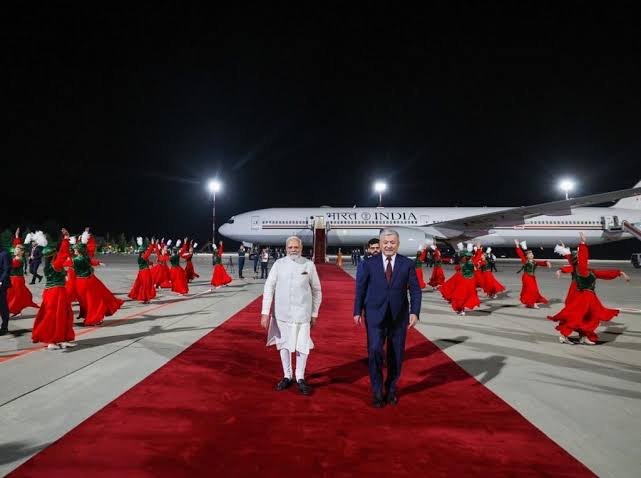
BISHKEK / NEW DELHI — Prime Minister Narendra Modi’s diplomatic meetings in Bishkek—marked by separate bilateral meetings with Iranian President Masoud Pezeshkian, Armenian Prime Minister Nikol Pashinyan, and Kyrgyz President Sadyr Japarov—signal a coordinated push to expand India’s strategic footprint across West Asia, the South Caucasus, and Central Asia.
While each meeting addressed distinct bilateral priorities, together they reflect a coherent geopolitical architecture aimed at securing trade corridors, diversifying defense partnerships, and reinforcing India’s doctrine of strategic autonomy.
Also Read: PM Modi Hails 7.8% Q1 GDP Growth, Calls for ‘Swadeshi’ Push and Domestic Spending
Strategic Autonomy Amid New Regional Alignments
The diplomatic outreach unfolds against the backdrop of emerging regional realignments, including deepening trilateral defense coordination among Saudi Arabia, Pakistan, and Turkey.
Rather than countering such developments by joining rigid military blocs, New Delhi is pursuing a multi-aligned strategy. By engaging key regional players across divergent geopolitical camps, India maintains its independent foreign policy while safeguarding its core economic and security interests.
Chabahar to the South Caucasus: Building Alternative Corridors
The bilateral talks in Bishkek highlighted two crucial transit and defense nodes:
- Iran and the Chabahar Gateway: In his meeting with President Pezeshkian, PM Modi discussed regional stability and trade connectivity. Iran's Chabahar port remains pivotal to New Delhi's transit strategy, providing maritime access to Afghanistan and resource-rich Central Asian markets while bypassing Pakistan.
- Armenia and South Caucasus Connectivity: India’s ties with Armenia have expanded rapidly into a robust defense partnership, with New Delhi supplying indigenous defense hardware. Positioned at the crossroads of Europe and Asia, Armenia serves as an essential link in linking the International North-South Transport Corridor (INSTC) with Yerevan’s "Crossroads of Peace" initiative, establishing an alternative multi-modal transit route from India to Europe via Iran and the Caucasus.
Also Read: ₹1,400-Crore Gurugram Metro Phase 2 Civil Tender Awaits State Clearance
Central Asian Pivot and Balancing Regional Footprints
PM Modi’s dialogue with Kyrgyz President Sadyr Japarov builds on India’s broader outreach to the five Central Asian republics (Kazakhstan, Kyrgyzstan, Tajikistan, Turkmenistan, and Uzbekistan). The region remains central to India’s long-term energy security, counter-terrorism cooperation, and regional stability.
Amid China’s expanding presence through its Belt and Road Initiative (BRI) and Beijing's close coordination with Islamabad, India is presenting a development-driven partnership model based on physical and digital connectivity, capacity building, and transparent infrastructure investment.
Key Takeaways from the Bishkek Outreach
- Pragmatic Multi-Alignment: India continues to balance strong relations with Western nations while maintaining functional strategic ties with Iran, Russia, and Central Asian partners.
- Proactive Trade Infrastructure: By connecting Chabahar to the INSTC and the South Caucasus, New Delhi is proactively constructing reliable supply lines to European and Eurasian markets.
- Diversified Alliances: India relies on flexible, interest-based cooperation across defense, energy, and transit rather than binding military alliances.