


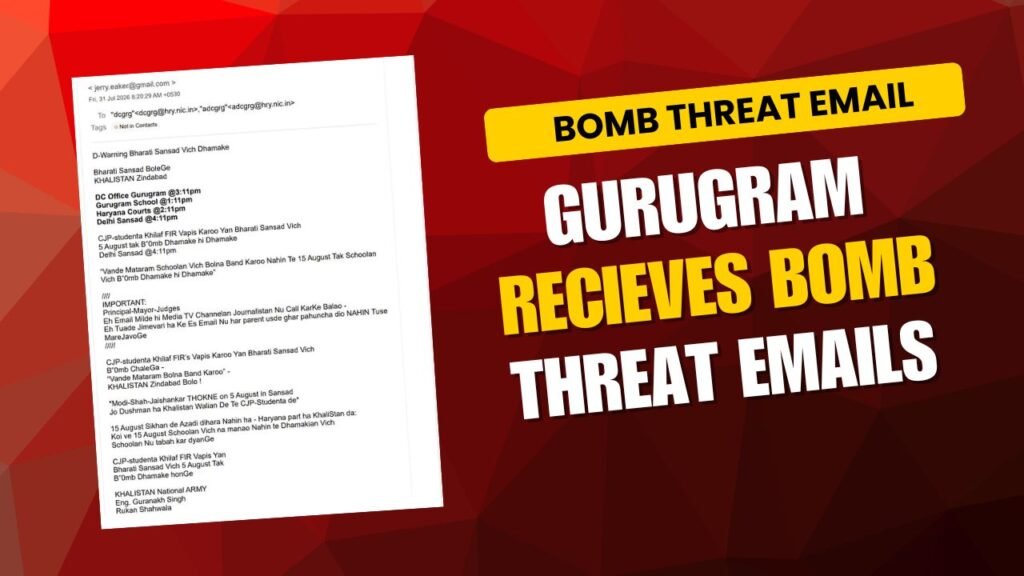
A sudden panic has shaken the northern India on Friday morning after Gurugram DC office, schools, court, and parliement in New Delhi received a bomb threat e-mail. Purportedly sent by an entity calling itself the “Khalistan National Army,” the emails triggered immediate security lockdowns, large-scale evacuations, and rigorous cyber forensic investigations.
Chronology of Threat Events
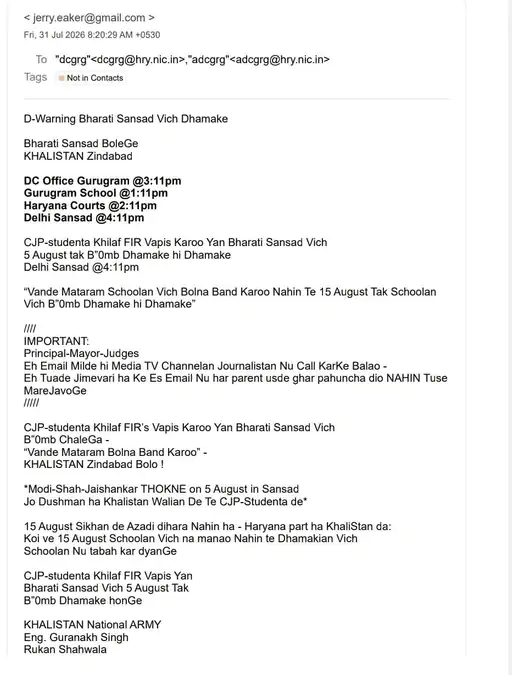
The threats landed in official inboxes at precisely 8:20 AM on Friday. The senders outlined a strict timetable for explosive bomb threats across multiple high-profile strategic zones:
- Gurugram Schools (1:11 PM)
- Haryana District Courts (2:11 PM)
- Gurugram DC Office (3:11 PM
- Parliament House, Delhi (4:11 PM)
Also Read: MCG Suspends JE Sumit Chahal, Issues Notice to Agency Over Monsoon Waterlogging
Core Demands
Here is a simplified, easy-to-understand breakdown of what happened:
What the Threat Email Said
Besides naming buildings to attack, the attackers used the email to complain about politics. They demanded that the police to drop legal charges (FIRs) against students protested at Jantar Mantar protest held by “Cockroach Janata Party (CJP).”
The email also:
- Set a deadline of August 5 for their demands.
- Told schools not to celebrate Independence Day or sing patriotic songs.
- Ordered the people who received the email to forward it to news agencies and journalists.
Why This Happened: Breaking Down the Strategy
Even though police searched every location and found no real bombs, this kind of fake threat still causes huge problems:
1. Scaring People Without Using Real Weapons
Security experts say these emails are meant to cause panic rather than physical damage. By making people afraid online, the attackers managed to shut down courtrooms, interrupt school classes, and waste the police's time and resources—all without actually building a bomb.
2. Hiding Behind Fake Email Addresses
Police officers point out that this is becoming a common trick across North India. Attackers use hidden, fake, or encrypted email accounts so no one can easily track down who sent them.