

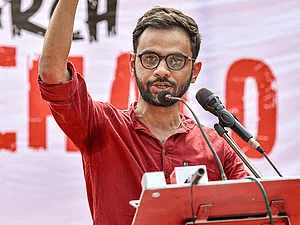
Nexusnewsalert | New Delhi, 19 May 2026 — In a significant ruling, the Supreme Court UAPA Bail verdict has strongly reinforced that “bail is the rule and jail is the exception” even in stringent Unlawful Activities (Prevention) Act cases. The Court criticised earlier judgments, including the one denying bail to Umar Khalid.
Key Highlights of Supreme Court UAPA Bail Ruling
| Aspect | Supreme Court Observation |
|---|---|
| Bail Principle | Bail is the rule, jail is the exception even under UAPA |
| Criticism of Smaller Benches | Cannot dilute larger bench precedents like KA Najeeb |
| Prolonged Delay | Valid ground for granting bail |
| Gulfisha Fatima Judgment | Failed to follow KA Najeeb precedent |
| Gurwinder Singh Judgment | “Two-prong test” not supported by law |
The Supreme Court made these observations while granting bail to Syed Iftikhar Andrabi after over six years in custody. The bench of Justice B.V. Nagarathna and Justice Ujjal Bhuyan emphasised that smaller benches cannot disregard larger bench rulings.
Also Read : Rajdhani Express Fire: Passengers Safely Evacuated After Blaze in AC
Supreme Court on Umar Khalid Case
The Court expressed serious reservations about the January 2026 Gulfisha Fatima judgment that had denied bail to Umar Khalid and Sharjeel Imam in the Delhi riots larger conspiracy case. It noted that the ruling did not properly apply the principles laid down in the 2021 KA Najeeb case, which recognises prolonged incarceration as a ground for bail under UAPA.
The Supreme Court clearly stated that judicial discipline requires smaller benches to either follow or refer larger bench precedents to a bigger bench. It warned against diluting established law.
Also Read : Daadi Ki Shaadi Release 2026: Aamir Khan Praises Riddhima Kapoor’s Debut in Upcoming
What the Supreme Court Said on UAPA Bail
The judgment underlined that Section 43D(5) of UAPA, which makes bail difficult, cannot override Article 21 constitutional rights. The Court observed that prolonged delay in trial can justify bail even in serious cases.
Justice Ujjal Bhuyan authored the judgment and stressed that the “two-prong test” introduced in some earlier rulings has no legal basis.
Also Read : Air India Flights Disrupted at Mumbai Airport Over Ground Staff
Implications of Supreme Court UAPA Bail Verdict
This ruling is expected to have far-reaching impact on hundreds of UAPA cases across the country. It strengthens the principle of personal liberty and sends a clear message that undertrials cannot be kept in jail indefinitely without speedy trial.
Legal experts view this as a major development in balancing national security concerns with fundamental rights.