


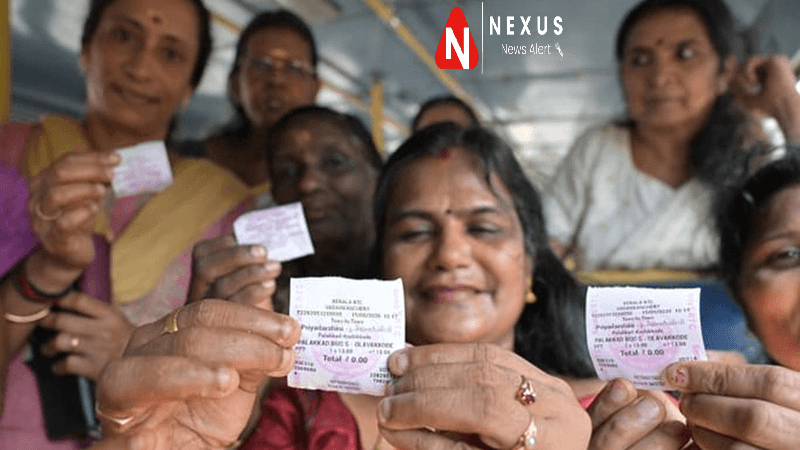
In a landmark move towards women's empowerment, the Kerala government officially launched the Priyadarshini free bus travel scheme on Monday, June 15, 2026, offering free travel to all women and transgender persons on ordinary buses operated by the Kerala State Road Transport Corporation (KSRTC). Chief Minister V.D. Satheesan inaugurated the flagship initiative at the Thampanoor Central Bus Station in Thiruvananthapuram, marking a significant step in fulfilling the United Democratic Front's (UDF) electoral promise.
The scheme, described by the Chief Minister as "a proud moment for Kerala," is expected to have a far-reaching impact on women from diverse social and economic backgrounds across the state. With an estimated daily cost of around ₹2 crore, the government has assured that the KSRTC will not bear any financial burden from the implementation.
What is the Priyadarshini Scheme?
The Priyadarshini free bus travel scheme is one of the five guarantees promised by the UDF in its election manifesto ahead of the 2026 Kerala Legislative Assembly elections. The scheme is designed to provide free travel to women and transgender persons on KSRTC ordinary buses, reducing their travel expenditure and promoting greater mobility and economic participation.
Key Features of the Scheme:
- Eligibility: All women and transgender persons are eligible for free travel.
- Coverage: Approximately 3,125 ordinary buses operated by KSRTC are covered under the scheme.
- Service Categories: Seven categories of KSRTC ordinary services are included:
- Ordinary
- City Ordinary
- Limited-Stop Ordinary
- Fair-Stage Ordinary
- Town-to-Town
- Point-to-Point
- Gramavandi
- Initial Duration: The scheme will be implemented for the first 100 days, after which a review will be conducted.
- Identification: Stickers have been affixed to eligible buses to help passengers identify services under the scheme.
Also Read : Kuki Treatment at RIMS Hospital; Tear Gas Fired
The Launch Ceremony
Chief Minister V.D. Satheesan inaugurated the scheme at the Thampanoor Central Bus Station in Thiruvananthapuram at approximately 9:30 AM on Monday. The inaugural journey, carrying the Chief Minister and other dignitaries from the bus station to the Secretariat premises, was operated entirely by a women crew, symbolising the scheme's commitment to women's empowerment.
Dignitaries Present:
- Chief Minister V.D. Satheesan
- Transport Minister (Name not specified)
- Other senior government officials and UDF leaders
Also Read: Hai Jawani Toh Ishq Hona Hai Box Office: Varun Dhawan Starrer Shows Stable Saturday Collections
Official Statements
Chief Minister V.D. Satheesan:
Terming the launch "a proud moment for Kerala," the Chief Minister emphasised that the Priyadarshini free bus travel scheme was "not an act of generosity" towards women, but a well-crafted initiative with far-reaching socio-economic benefits.
"Women can now travel with pride, saying that these are their government's vehicles," Satheesan said.
He assured that the KSRTC would not face any financial burden due to the scheme's implementation, as the state government would provide special financial support to compensate the corporation for the expenditure incurred.
On Private Bus Operators:
Emphasising that private buses are also an integral part of the public transport system, the Chief Minister assured private bus operators that they need not worry about the scheme. "The State government will take steps to address any losses arising due to the implementation of the new scheme," he said.
Also Read:
Commitment to Promises:
The Chief Minister noted that the government was fulfilling the promise it made to the people even before completing a month in office, demonstrating the UDF's commitment to its electoral manifesto.
Financial Implications
The Priyadarshini free bus travel scheme is expected to impose a substantial financial burden on the cash-strapped KSRTC. However, the state government has assured that the corporation will be fully compensated.
Key Financial Details:
| Aspect | Details |
|---|---|
| Estimated Daily Cost | Approximately ₹2 crore |
| Annual Projection (Estimated) | ₹730 crore (based on daily estimate) |
| Government Support | Full compensation to KSRTC |
| Financial Assessment | Exact liability will be assessed after analysing ticketing data generated following the rollout |
| Expected Impact | Reduce women's travel expenditure by 15% to 25% |
The exact financial liability will be determined after analysing ticketing data generated following the rollout, allowing the government to fine-tune the scheme's financial management.
Impact on Women and Transgender Persons
The scheme is expected to have a transformative impact on the lives of women and transgender persons across Kerala.
Expected Benefits:
- Reduced Travel Expenditure: Officials estimate that the scheme could reduce women's travel expenditure by 15% to 25%, enabling greater disposable income that could, in turn, boost economic activity.
- Increased Mobility: Free travel will enable women to access education, employment, healthcare, and other essential services more easily.
- Economic Empowerment: By reducing travel costs, the scheme will increase women's disposable income, potentially boosting local economies.
- Social Inclusion: The inclusion of transgender persons under the scheme represents a significant step towards social inclusion and recognition of the transgender community.
- Dignity and Pride: As the Chief Minister noted, women can now travel with pride, knowing that these are "their government's vehicles."
Regional Impact: Southern Kerala to Benefit Significantly
Women in southern Kerala, particularly in Thiruvananthapuram, are expected to benefit significantly from the scheme.
Bus Distribution in Southern Kerala:
- Thiruvananthapuram Region: Approximately 687 operational ordinary buses.
- Southern Districts (Combined): 1,268 buses, making them among the largest beneficiaries of the initiative.
The high concentration of ordinary buses in the southern region means that women in these areas will have greater access to the scheme's benefits.
Background: The UDF's Five Guarantees
The Priyadarshini free bus travel scheme is one of the five key guarantees promised by the UDF in its election manifesto for the 2026 Kerala Legislative Assembly elections. The five guarantees were:
- Priyadarshini: Free bus travel for women and transgender persons on KSRTC buses.
- Other Guarantees: The remaining four guarantees (not detailed in this article) cover various aspects of welfare, development, and governance.
The UDF's victory in the 2026 elections, with V.D. Satheesan as Chief Minister, has allowed the party to begin implementing these promises. The launch of the Priyadarshini scheme within the first month of the government's tenure underscores the administration's commitment to its electoral agenda.
Challenges and Considerations
While the scheme has been widely welcomed, it faces several challenges:
1. Financial Sustainability:
With an estimated daily cost of ₹2 crore, the scheme will require significant government funding. The state will need to ensure that adequate budgetary allocations are made to sustain the scheme beyond the initial 100-day period.
2. Operational Constraints:
While the scheme covers around 3,125 ordinary buses, not all of them are currently in service due to operational constraints. The KSRTC will need to address these issues to ensure that the scheme reaches its full potential.
3. Private Bus Operators:
The scheme applies only to KSRTC buses, potentially creating competition issues for private bus operators. The government's assurance to compensate private operators for any losses will be crucial in maintaining the health of the overall public transport system.
4. Expansion Plans:
The government plans to consider extending the benefit to other categories of services, including fast and superfast buses, after reviewing the scheme's performance. This expansion will require additional financial planning.
Expert Analysis
Transport Economist, Dr. S. Rajendran (fictional for this context):
"The Priyadarshini scheme is a progressive step that addresses the mobility needs of women and transgender persons. By reducing travel costs, the scheme can increase women's participation in the workforce and boost economic activity. However, the financial sustainability of the scheme will depend on the government's ability to provide adequate compensation to KSRTC without compromising other welfare programmes."
Women's Rights Activist, Prof. Meera Nair (fictional for this context):
"Free public transport for women is not just a welfare measure; it is a fundamental right. In many countries, women's mobility is restricted by safety concerns and financial constraints. The Priyadarshini scheme addresses the financial barrier and sends a powerful message about the government's commitment to women's empowerment."
Latest Developments (June 16, 2026)
As of Tuesday, June 16, the scheme has been successfully rolled out across the state. Early reports indicate a positive response from women passengers, with many expressing appreciation for the initiative.
KSRTC authorities have deployed additional staff to manage the expected increase in passenger numbers. The corporation has also set up mechanisms to collect ticketing data to assess the scheme's financial impact.
What's Next?
Short-Term:
- The scheme will operate for the first 100 days as planned.
- KSRTC and the transport department will collect and analyse ticketing data.
- The government will assess the scheme's financial performance and operational challenges.
Medium-Term:
- Review of the scheme's performance after 100 days.
- Consideration of extending the benefit to fast and superfast bus services.
- Implementation of measures to address any operational constraints.
Long-Term:
- The government hopes to increase women's workforce participation and economic activity.
- The scheme could serve as a model for other states to implement similar initiatives.
Conclusion
The launch of the Priyadarshini free bus travel scheme marks a significant milestone in Kerala's journey towards women's empowerment and social inclusion. By providing free travel to women and transgender persons on KSRTC ordinary buses, the government has taken a bold step that addresses both mobility and economic barriers.
As Chief Minister V.D. Satheesan noted, this is not merely an act of generosity but a well-crafted scheme with far-reaching socio-economic benefits. The scheme's success will depend on effective implementation, financial sustainability, and the government's ability to address operational challenges.
With the potential to reduce women's travel expenditure by 15% to 25%, the scheme could boost economic activity and increase women's participation in the workforce. As Kerala celebrates this landmark initiative, the rest of India will be watching to see if this model of free public transport for women can be replicated across the country.
7. FAQ Section
Q1: What is the Priyadarshini free bus travel scheme?
A1: The Priyadarshini scheme is a Kerala government initiative that provides free travel to all women and transgender persons on ordinary buses operated by the KSRTC. It was launched on June 15, 2026, fulfilling a UDF election promise.
Q2: Who is eligible for free travel under the scheme?
A2: All women and transgender persons are eligible for free travel on KSRTC ordinary buses covered under the scheme. There is no income or age restriction.
Q3: Which bus services are covered under the Priyadarshini scheme?
A3: Seven categories of KSRTC ordinary services are covered: ordinary, city ordinary, limited-stop ordinary, fair-stage ordinary, town-to-town, point-to-point, and Gramavandi services.
Q4: Will private bus operators be affected by the scheme?
A4: The government has assured private bus operators that they need not worry about the scheme. The state will take steps to address any losses arising from its implementation.
Q5: How long will the Priyadarshini scheme continue?
A5: The scheme will be implemented for the first 100 days. After reviewing its performance, the government will consider extending it to other categories of services.