


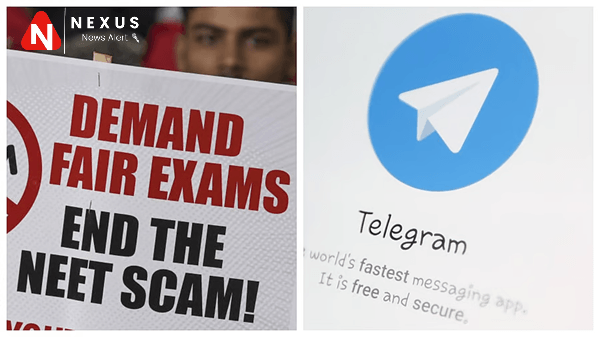
In a massive crackdown on digital exam malpractice, the central government has enforced a Telegram ban in India 2026 just days before the crucial NEET-UG re-examination. Citing the organized use of the messaging platform by cheating rackets, the Ministry of Electronics and Information Technology (MeitY) has blocked access to the app and disabled its message-editing feature.
The move comes as a relief for the National Testing Agency (NTA) and students who have been plagued by fake "paper leak" scams circulating on the platform. This article covers everything you need to know about the ban, the fraudulent channels involved, and how it impacts the lakhs of students waiting for the June 21 exam.
What Happened?
The Telegram ban in India 2026 was formally invoked on June 15, acting on urgent recommendations from the NTA. Authorities discovered that organized cyber fraud networks were using Telegram channels to demand money from students and parents in exchange for fake NEET question papers .
Also Read : Khan Sir Gets Interim Protection From Arrest in Khan Sir coaching firing case
The government decided this was a necessary intervention to maintain public order. Officials stated that while they tried removing individual channels, the scale of the fraud required a platform-level restriction to stop the spread of misinformation ahead of one of the country's toughest medical entrance exams .
Key Highlights of the Telegram Restrictions
The restrictions are not a permanent shutdown but a "calibrated" set of time-bound measures designed to cover the sensitive exam period. Here are the specific directives issued by MeitY under Section 69A of the IT Act, 2000:
- Complete Access Block: Access to Telegram in India is restricted until June 22, 2026. This covers the day of the NEET re-exam (June 21) and the immediate aftermath to prevent post-exam manipulation .
- Disabling the Edit Feature: Telegram has been ordered to disable its "message editing" feature for existing messages in India until June 30, 2026 .
- Legal Basis: The action falls under the IT Act to prevent "public order" disturbances caused by cheating rackets .
Why Telegram? The "Edit Feature" Loophole
You might wonder why this specific app was targeted. While other social media platforms exist, the NTA pointed out a specific structural flaw in Telegram that made it a haven for fraudsters.
The Exploit: On Telegram, channel administrators can edit older messages. Unlike WhatsApp or Signal, where edited messages show an "edited" label or change timestamps, Telegram admins could edit a post from a month ago and replace a harmless image with a PDF of the question paper after the exam was over.
Also Read : Video: Sundar Pichai Booed at Stanford Graduation 2026, Students Stage Walkout Over Google-Israel Ties
How Cheating Rackets Used It:
- Before the Exam: A channel admin posts a generic message like "Stay Tuned."
- After the Exam: The admin edits that old message to attach the actual NEET question paper.
- Creating the Lie: The admin takes a screenshot showing the original timestamp (before the exam) next to the new question paper.
- The Fraud: This screenshot is circulated as "proof" that the paper was leaked early, pressuring students to pay up for future exams .
By disabling this feature until June 30, the government has effectively cut off the ability to create this false "evidence."
Official Statements: NTA Welcomes the Move
The National Testing Agency has publicly welcomed the Telegram ban in India 2026, stating that the decision ensures a fair playing field for honest students.
In an official release, the NTA clarified that the promise of any leaked paper is entirely fake. "No one, repeat, no one has access to the question paper before the exam," the agency reiterated .
The NTA also thanked MeitY, the Ministry of Home Affairs, and the Indian Cyber Crime Coordination Centre (I4C) for their swift action. The agency noted that while they regret the inconvenience to legitimate users, the measure was a "last resort" after other remedies failed .
Impact on Students and the Education Industry
For the estimated 15+ lakh students appearing for the NEET re-test, the ban brings both relief and a minor inconvenience.
- Security: Students can now be assured that the exam integrity is being protected at the highest level of government, preventing last-minute panic caused by fake "leak" rumors.
- Inconvenience: Many students use Telegram for legitimate study groups, sharing notes, and free coaching classes. These groups will be inaccessible until the ban lifts on June 22.
- Industry Reaction: Educational technology companies and coaching institutes that rely on Telegram for broadcasting updates have been forced to shift to alternative platforms like WhatsApp or Signal temporarily.
The Cheating Racket: Names and Numbers
The investigation has revealed a sophisticated network of criminals operating in plain sight. The NTA identified several specific channels that were explicitly named to target anxious students.
Exposed Channel Names:
- "PAPER LEAKED NEET"
- "Re-NEET 2026"
- "Private Mafia"
- "REE NEET MAFIAA"
The Scale of Fraud:
Law enforcement agencies have already made significant arrests, proving this was not just rumor-mongering but organized cyber crime.
- Ahmedabad Case: The Ahmedabad City Cyber Crime Branch arrested members of an inter-state gang operating eight Telegram channels. They allegedly handled transactions worth approximately Rs 1.5 crore and contacted nearly 1,000 mobile numbers in a single month .
- Bihar Alert: Bihar Police's Economic Offences Unit issued an official advisory warning students specifically about Telegram-based frauds .
Background: The NEET Controversy
To understand the severity of the Telegram ban in India 2026, one must look at the recent history. NEET UG 2026 was originally cancelled due to a massive paper leak crisis that shook the country, leading to political outrage and Supreme Court intervention.
The government ordered a re-test scheduled for June 21, 2026. In an effort to make the re-test foolproof, the NTA has also increased the exam duration from 180 minutes to 195 minutes and enhanced security protocols at physical centers .
Latest Developments (June 16 Update)
As of the morning of June 16, users in India attempting to open the Telegram app are met with connectivity errors. The block is being implemented by Internet Service Providers (ISPs) at the DNS level.
Telegram has reportedly complied with the order to disable the editing feature, though the company has not yet issued a public statement regarding the ban.
What’s Next for Telegram Users?
- For Students: Prepare for your exam using official offline materials. Avoid searching for "paper leaks" online, as this could expose you to cyber traps.
- For Regular Users: The ban is temporary. Service will likely resume by June 23, 2026.
- Legal Challenges: Given Telegram's history of challenging government bans (such as in Russia previously), it remains to be seen if the company will approach the courts. However, given the "public order" emergency invoked, legal challenges are unlikely to succeed before the exam.
Conclusion
The Telegram ban in India 2026 represents a significant escalation in the government's war against exam fraud. While digital rights activists may question the temporary suspension of a communication platform for millions, the NTA and MeitY have prioritized the sanctity of the NEET exam over convenience.
By targeting the specific loophole of message editing and blocking access during the critical window, the government aims to send a clear message: cheating rackets will not be tolerated, and student interests will be protected at all costs. As June 21 approaches, students are urged to trust only official NTA channels and ignore digital noise.
7. FAQ Section
Q1: Why has the government imposed a Telegram ban in India 2026?
A1: The government imposed the ban to prevent organized cheating rackets from using the platform to spread fake "paper leak" news and defraud students ahead of the NEET-UG re-examination scheduled for June 21 .
Q2: How long will the Telegram ban last?
A2: The access ban is temporary and will last until June 22, 2026. However, the "message editing" feature will remain disabled until June 30, 2026 .
Q3: Will I still be able to chat on Telegram during the ban?
A3: No. The restriction blocks access to the Telegram platform entirely in India. You will not be able to send or receive messages until the ban is lifted on June 22 .
Q4: Is the NEET re-test on June 21 still happening?
A4: Yes. The NTA has confirmed that the NEET (UG) 2026 re-examination will be conducted as scheduled on June 21. The security of the examination is unaffected .
Q5: Did Telegram really leak the NEET paper?
A5: No. The NTA has clarified that this was a fraud. Scammers used Telegram's editing feature to create fake "evidence" of a leak after the exam had already happened. No paper was actually leaked .