

NexusNewsAlert | Middle East Crisis | Monday, March 23, 2026 - BREAKING
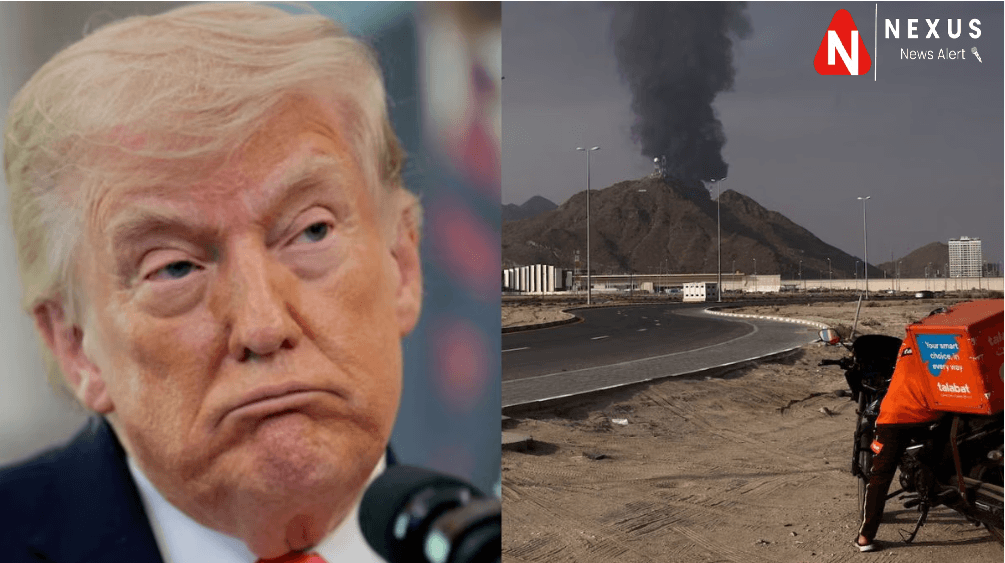
Iran on Monday threatened to attack electrical power plants across West Asia that supply electricity to US military bases, marking a dramatic escalation just hours before President Donald Trump's 48-hour deadline for reopening the Strait of Hormuz expires at 7:44 PM ET today.
The warning from Iran's paramilitary Revolutionary Guard represents Tehran's most aggressive posture yet in the month-long conflict, as oil prices surge past $114 per barrel and global markets brace for what energy analysts are calling "the worst supply disruption since the 1970s oil shocks."
IRGC Statement: "Do Not Doubt We Will Do This"
Iranian state television broadcast the Revolutionary Guard's statement Monday morning, threatening comprehensive retaliation if Iranian power infrastructure comes under American or Israeli attack.
"What we have done is to announce our decision that if the power plants are attacked, Iran will retaliate by targeting the power plants of the occupying regime and the power plants of regional countries that supply electricity to US bases, as well as the economic, industrial and energy infrastructures in which Americans have shares," the statement declared, referring to Israel as an "occupying regime."
The IRGC added ominously: "Do not doubt that we will do this."
This threat directly responds to Trump's ultimatum issued Saturday evening via Truth Social, where the president warned he would "hit and obliterate" Iran's power plants "starting with the biggest one first" if the Strait of Hormuz remains effectively closed by Monday evening.
Strait of Hormuz Crisis: One-Fifth of Global Oil at Stake
The Strait of Hormuz, the narrow waterway connecting the Persian Gulf to the Arabian Sea and Indian Ocean, has been effectively paralyzed since early March when Iran began targeting commercial shipping following US-Israeli strikes on Iranian territory beginning February 28.
Approximately one-fifth of global oil supply passes through this 21-mile-wide chokepoint during normal operations. Iran has claimed the strait remains open for neutral nations but has systematically attacked vessels it deems connected to enemy states, bringing tanker traffic to a near-complete halt.
Oil prices have surged nearly 50% since the conflict began, with Brent crude hitting $114.09 per barrel on Monday and US crude reaching $100.29. Goldman Sachs analysts warned Friday that elevated prices could persist through 2027, while the International Energy Agency called the disruption "the largest supply disruption in the history of the global oil market."
Iran's Expanded Target List: Regional Energy Infrastructure
Power Plants Supplying US Military Bases
Iran's Revolutionary Guard explicitly threatened power generation facilities in Gulf Arab states that host US military installations, including:
Qatar: Home to Al Udeid Air Base, the largest US military installation in the Middle East, housing over 10,000 personnel and serving as CENTCOM forward headquarters.
Bahrain: Headquarters of US Naval Forces Central Command and the Fifth Fleet.
UAE: Multiple US military facilities including Al Dhafra Air Base.
Kuwait: Ali Al Salem Air Base and Camp Arifjan.
Saudi Arabia: Prince Sultan Air Base and other installations.
Economic and Energy Assets with American Stakes
The IRGC statement broadened potential targets to include "economic, industrial and energy infrastructures in which Americans have shares"—language suggesting oil refineries, petrochemical plants, liquefied natural gas facilities, and desalination plants operated by companies with US ownership or partnerships could be hit.
This represents a massive expansion of the conflict's scope, potentially impacting civilian infrastructure across the Gulf region and triggering catastrophic humanitarian consequences given the area's dependence on desalination for drinking water.
Trump's Deadline: 48 Hours to Open the Strait
President Trump's Saturday evening ultimatum set a precise 48-hour window expiring Monday at 7:44 PM ET. The president has vacillated between demanding international coalition support, declaring the US would unilaterally reopen the strait, and stating enigmatically that it would "open itself."
Trump's attempts to rally NATO allies to provide naval escorts for commercial vessels have largely failed, with European leaders unwilling to commit warships to what they view as a potentially uncontrollable escalation. Trump responded by calling NATO members "cowards" for refusing to assist.
The US Navy has offered government-backed reinsurance and promised escorts, but no tanker has yet transited the strait with American naval protection, according to multiple maritime industry sources.
Legal and Humanitarian Concerns: War Crimes Warnings
International Law on Civilian Infrastructure
Under international humanitarian law, power plants serving civilian populations can be targeted only if the military advantage clearly outweighs the suffering inflicted on civilians—a high legal bar known as the proportionality principle.
Attacks on power plants would be "inherently indiscriminate and clearly disproportionate" and constitute war crimes, Iran's UN Ambassador wrote to the Security Council, according to Iran's state-run IRNA news agency.
The US counters that Iran's Revolutionary Guard controls much of the country's infrastructure and directly powers the war effort, potentially making these facilities legitimate military targets under the laws of armed conflict.
Humanitarian Impact of Power Plant Strikes
Destroying electrical generation capacity in Gulf states during peak summer temperatures approaching 50°C (122°F) would create life-threatening conditions for millions of civilians. Modern Gulf societies depend entirely on electricity for:
- Air conditioning (survival necessity in extreme heat)
- Desalination plants providing drinking water
- Hospitals and medical facilities
- Food refrigeration and supply chains
- Communications infrastructure
International humanitarian organizations have warned that strikes on civilian power infrastructure could trigger a humanitarian catastrophe rivaling the scale of natural disasters.
Weekend Violence: Iranian Missiles Strike Israeli Nuclear Research Area
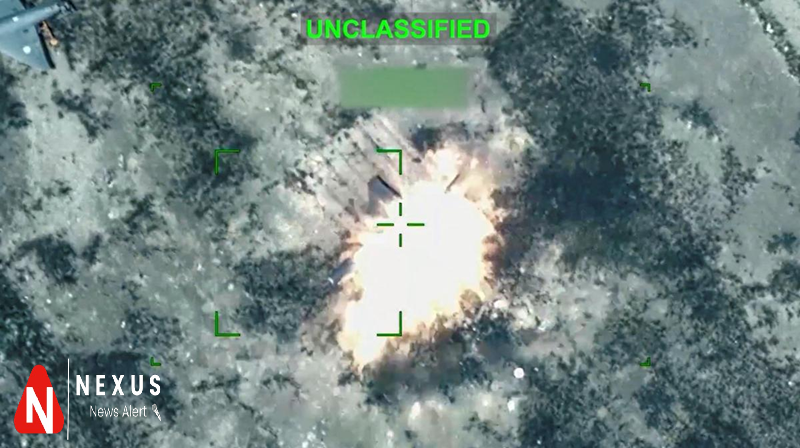
Saturday night saw Iran launch approximately 180 missiles targeting Dimona and Arad in southern Israel—cities located near Israel's main nuclear research center. Israeli authorities reported around 180 injuries, some severe, though Israeli Prime Minister Benjamin Netanyahu called it a "miracle" no one was killed.
The International Atomic Energy Agency confirmed it received "no indication of damage to the nuclear research center Negev" in Dimona, though IAEA Director General Rafael Grossi stressed that "maximum military restraint should be observed, in particular in the vicinity of nuclear facilities."
Iran's state media confirmed the strikes were retaliation for Israel's March 16 attack on the Natanz nuclear enrichment facility.
Israel is widely believed to possess nuclear weapons, though it maintains a policy of nuclear ambiguity, neither confirming nor denying their existence.
Gulf Arab States Under Fire: Saudi, UAE Targeted
Iran continued its missile and drone attacks on Gulf neighbors Monday, demonstrating the conflict's widening geographic scope:
Saudi Arabia: Defense Ministry reported intercepting one ballistic missile targeting Riyadh while another struck an "uninhabited area." Saudi Arabia expelled Iran's military attaché and three embassy staff, declaring them persona non grata with 24 hours to depart.
United Arab Emirates: Authorities activated air defenses against incoming Iranian missiles early Monday without elaborating on damage or casualties.
Bahrain and Kuwait: Both nations sounded missile alerts Monday morning, though immediate damage assessments were unavailable.
The attacks undermine Iran's claim that it only targets "US military assets" and demonstrates Tehran's willingness to strike civilian-populated areas in nations hosting American forces.
What Happens Next: Three Scenarios
Scenario 1: Trump Executes Power Plant Strikes (High Risk)
If Trump follows through on his threat after the Monday deadline expires, Iran has vowed to:
- Completely close the Strait of Hormuz indefinitely until destroyed power plants are rebuilt (potentially years)
- Mine the entire Persian Gulf, according to Iran's Defense Council statement Monday
- Strike regional power plants, desalination facilities, oil refineries, and petrochemical plants
- Target American and Israeli infrastructure throughout West Asia
Outcome: Catastrophic humanitarian crisis, oil prices potentially reaching $150-200 per barrel, global recession, potential ground war.
Scenario 2: Diplomatic De-escalation (Low Probability)
International mediators including Turkey, Qatar, and potentially Russia broker a ceasefire with terms including:
- US and Israel halt strikes on Iranian energy and nuclear facilities
- Iran reopens Strait of Hormuz under international monitoring
- Temporary cessation of hostilities pending negotiations
Outcome: Oil prices retreat to $80-90 range, markets stabilize, humanitarian relief possible.
Probability: Low, given entrenched positions and Trump's ultimatum rhetoric.
Scenario 3: Limited Strikes, Managed Escalation (Medium Probability)
US conducts symbolic strikes on Iranian power infrastructure while avoiding major civilian impact. Iran retaliates proportionally against military targets, both sides step back from brink.
Outcome: Strait remains partially closed, oil prices stay elevated ($100-120), conflict continues at lower intensity.
Probability: Medium, though managing escalation in fog of war is notoriously difficult.
Oil Market Impact: Prices Not Seen Since 2008
Brent crude's climb to $114 per barrel represents levels not sustained since the 2008 financial crisis. US average gasoline prices reached $3.942 per gallon over the weekend, straining consumers already facing inflation concerns.
The International Energy Agency chief Fatih Birol stated Asia is "at the forefront of the crisis" due to dependence on Strait of Hormuz transit. While IEA is working with Canada, Mexico, and Australia to increase production and release strategic reserves, Birol admitted these measures cannot fully offset Middle Eastern supply losses.
Iran's strikes on Qatar's LNG infrastructure have eliminated 17% of global liquefied natural gas export capacity for potentially 3-5 years, creating a dual energy crisis in both oil and natural gas markets.
Frequently Asked Questions
Q1: When does Trump's 48-hour deadline expire?
The deadline expires Monday, March 23, 2026 at 7:44 PM ET (Tuesday 12:14 AM GMT), exactly 48 hours after Trump posted his threat on Truth Social Saturday evening.
Q2: What power plants would the US likely target in Iran?
Probable targets include Iran's largest thermal power plants: Montazeri Power Plant (Isfahan, 4,600 MW capacity), Shahid Rajaee Power Plant (Qazvin), and Tehran's combined-cycle facilities. Attacks would likely avoid nuclear facilities due to international law prohibitions and contamination risks.
Q3: Can Iran actually close the Strait of Hormuz permanently?
Militarily, yes. Iran can deploy naval mines, anti-ship missiles, and fast attack boats to make transit prohibitively dangerous. The US Navy could clear the strait with significant effort, but not while Iranian coastal missile batteries remain operational—requiring extensive air campaign.
Q4: How high could oil prices go if the war escalates further?
Analysts project $150-200 per barrel if the Strait closes indefinitely and Gulf infrastructure is systematically targeted. The 1979 oil crisis saw inflation-adjusted prices equivalent to $120-140 today.
Q5: What are the legal implications of attacking civilian power plants?
Under Geneva Conventions Additional Protocol I, attacking objects indispensable to civilian survival is prohibited. However, Article 52 allows targeting dual-use infrastructure if military advantage outweighs civilian harm. International Criminal Court could investigate war crimes allegations.
Q6: Could this escalate into World War III?
Unlikely in traditional sense. Russia and China have economic interests in de-escalation. However, regional conflagration drawing in Turkey, Gulf states, and potentially Pakistan creates unprecedented complexity not seen since 1973 Arab-Israeli War.