

Published by NexusNewsAlert | Markets | March 19, 2026 - LIVE Updates
BREAKING: Historic Stock Market Crash Rocks Dalal Street
Indian stock markets witnessed a devastating bloodbath on Thursday, March 19, 2026, with the Sensex crashing 1,953 points (2.55%) to close at 74,751.13, while the Nifty 50 plummeted 589 points (2.48%) to settle at 23,188.85—below the critical 23,200 psychological level. Over ₹7 lakh crore of investor wealth evaporated in a single trading session, marking one of the worst market routs since the COVID-19 crash of March 2020.
The sensex crash today was triggered by a toxic combination of factors: HDFC Bank chairman resigned over alleged ethics violations, oil prices surged past $110 per barrel amid escalating West Asia attacks, and hawkish US Federal Reserve policy commentary dampened global sentiment. NexusNewsAlert provides live minute-by-minute coverage of the sensex crash today reason and expert analysis on market recovery prospects.
HDFC Bank Chairman Resigned: The Catalyst That Shook Markets
Atanu Chakraborty's Shocking Exit
The immediate trigger for today's market carnage was the unexpected resignation of Atanu Chakraborty, part-time chairman and independent director of HDFC Bank—India's largest private sector lender. In a terse resignation letter dated March 17, 2026 (filed March 18), Chakraborty cited "certain happenings and practices within the bank" over the past two years that were "not in congruence with my personal values and ethics."
The cryptic eight-word phrase—"not in congruence with my personal values and ethics"—sent shockwaves through Indian banking circles. Notably, Chakraborty provided no specifics, no names, and no operational details about the alleged ethical concerns, leaving investors, regulators, and analysts scrambling for answers.
HDFC Bank Share Price Crashes 8.6%
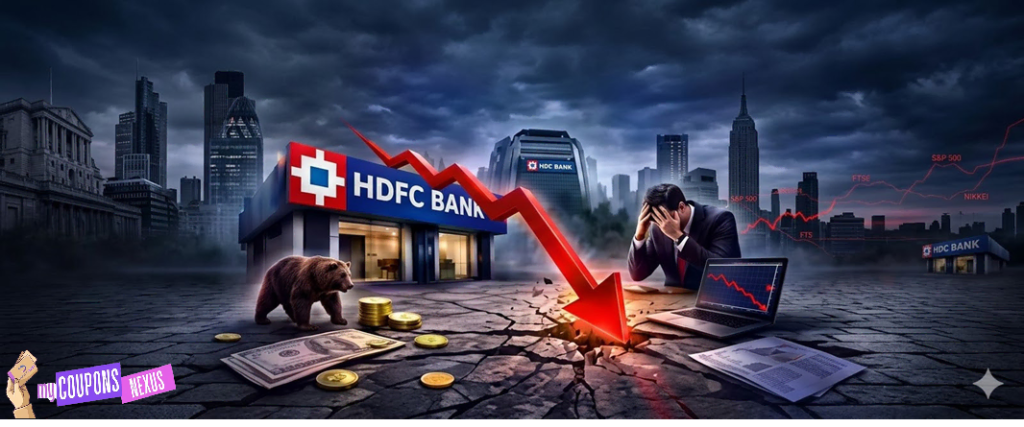
HDFC Bank shares opened at ₹770—an immediate 8.6% crash from Wednesday's close of ₹842.95—hitting a fresh 52-week low. By market close, the stock recovered slightly to ₹799.65, still down 5.14% for the day.
The selloff erased approximately ₹1.10 lakh crore (₹110,000 crore) from HDFC Bank's market capitalization within hours, dragging the broader indices downward given HDFC Bank's 11% weightage in the Nifty 50 index.
HDFC Bank American Depositary Receipts (ADRs) trading in New York plummeted 7.3% in pre-market trading, signaling global investor panic over India's banking flagship.
Who Is Atanu Chakraborty? 1985 Batch IAS Officer
Atanu Chakraborty (born 1963) is a distinguished 1985 batch Indian Administrative Service (IAS) officer from the Gujarat cadre who served as India's Finance Secretary and Secretary, Department of Economic Affairs under the Modi government.
His illustrious bureaucratic career included key roles during India's economic policy formulation, GST implementation, and fiscal crisis management. Appointed as HDFC Bank's part-time chairman and independent director in May 2021, Chakraborty brought institutional credibility and governance expertise to India's most valuable private bank.
His sudden resignation after just three years in the role—particularly citing unspecified "ethical concerns"—has raised troubling questions about internal governance at HDFC Bank, which manages assets exceeding ₹28 lakh crore (over $330 billion USD).
Keki Mistry Appointed Interim Chairman
In response to the leadership vacuum, the Reserve Bank of India (RBI) swiftly approved Keki Mistry—former CEO of HDFC Ltd—as interim part-time chairman of HDFC Bank for three months, effective March 19, 2026.
Keki Mistry is a veteran banker who spent over 40 years building HDFC Ltd into India's premier housing finance institution before its historic merger with HDFC Bank in July 2023. His appointment aims to stabilize investor confidence, though markets remain nervous about the circumstances surrounding Chakraborty's exit.
HDFC Bank's Response: "Nothing Worth Concern"
During a hastily convened investor call on Thursday morning, Mistry stated that "no evidence or details" of the alleged unethical practices had been provided to the board. The bank confirmed that "there are no reasons other than those mentioned in the said letter" for Chakraborty's resignation.
However, this vague reassurance failed to calm investor fears, with many questioning why a respected IAS officer would resign so abruptly without substantiating his ethics allegations.
RBI Affirms: HDFC Bank Has "Sound Financials"
India's banking regulator, the Reserve Bank of India, issued a statement affirming that HDFC Bank has "sound financials" and is run by a "professionally run board and competent management team." The RBI recently approved HDFC Bank's request for a transition arrangement and continues to engage with the board.
Despite the RBI's reassurances, market sentiment remained fragile, with analysts warning that prolonged uncertainty could impact HDFC Bank's valuation multiples and deposit growth.
Sensex Crash Today Reason: Five Key Factors
1. HDFC Bank Chairman Resignation (Primary Trigger)
As India's second-largest company by market capitalization (after Reliance Industries) and the most valuable private bank, HDFC Bank's 8.6% intraday crash dragged the entire banking sector down. Nifty Bank index plummeted nearly 3%, with ICICI Bank, Axis Bank, and Kotak Mahindra Bank all closing over 2% lower.
Given HDFC Bank's massive institutional and retail investor base—including foreign institutional investors (FIIs) holding 47% stake—the ethics controversy triggered widespread panic selling.
2. Oil Prices $110+ Due to West Asia Attacks
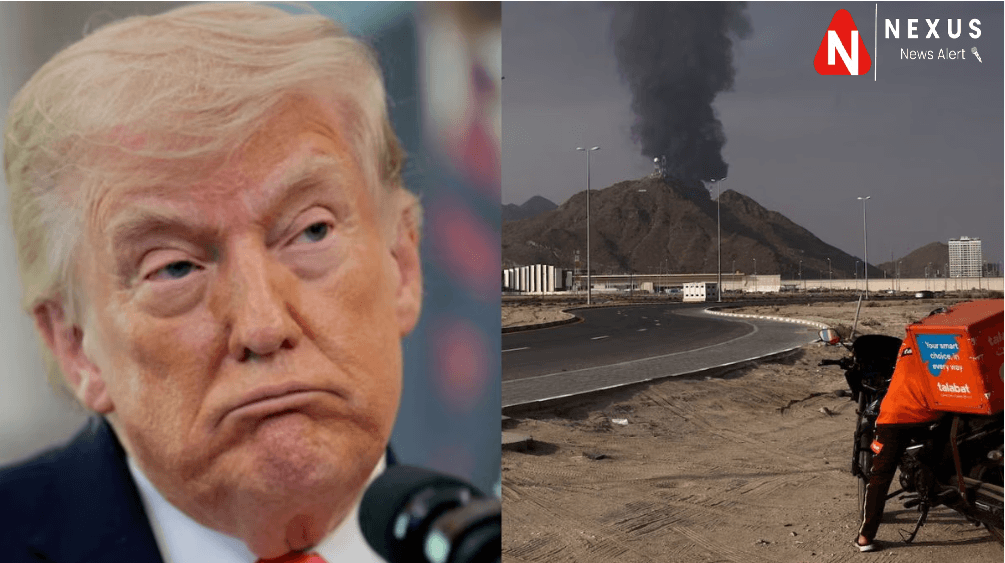
Brent Crude oil prices surged past $111 per barrel (briefly touching $116) after Israel launched airstrikes on Iran's South Pars Gas Field, the world's largest natural gas field. The attack represents a dramatic escalation in the Iran-US war (now Day 19), threatening global energy supplies.
India imports over 85% of its crude oil requirements, making the economy highly vulnerable to oil price spikes. Higher oil prices fuel inflation, widen the current account deficit, and squeeze corporate profit margins—particularly for auto, aviation, paint, and logistics sectors.
Auto and Auto Ancillaries stocks crashed up to 5% on Thursday, anticipating reduced consumer demand and margin pressure.
3. Hawkish US Federal Reserve Policy
The US Federal Reserve maintained its hawkish stance on interest rates, signaling no rate cuts in the near term despite global economic headwinds. Fed Chair Jerome Powell's cautious commentary about persistent inflation and geopolitical risks dampened risk appetite worldwide.
Higher US interest rates make emerging markets like India less attractive for foreign portfolio investors (FPIs), who have sold ₹42,000 crore worth of Indian equities in March 2026 alone.
4. Profit Booking After Three-Day Rally
Thursday's crash came after a three-day winning streak during which the Sensex gained 2,140 points (2.87%) and the Nifty added 626 points (2.7%). Many traders booked profits, exacerbating the selloff once negative triggers emerged.
5. Global Market Weakness
Asian markets closed deep in the red—Japan's Nikkei down 2.3%, Hong Kong's Hang Seng down 2.1%, and South Korea's KOSPI down 1.8%—reflecting global risk-off sentiment. European markets also opened lower, with London's FTSE 100 and Germany's DAX both shedding over 1.5%.
Investors Lost Today: Sector-Wise Carnage
Banking & Financial Services: Bloodbath
- HDFC Bank: -5.14% (₹799.65)
- ICICI Bank: -2.8%
- Axis Bank: -3.2%
- Kotak Mahindra Bank: -2.5%
- State Bank of India: -1.9%
Nifty Bank index closed 2.98% lower at 49,876.25, its worst single-day fall in 2026.
Auto & Auto Ancillaries: Oil Price Impact
- Tata Motors: -4.6%
- Maruti Suzuki: -3.8%
- Mahindra & Mahindra: -3.5%
- Eicher Motors: -4.1%
Rising crude costs directly impact auto demand (higher petrol/diesel prices) and profitability (input cost inflation).
Realty & Infrastructure: Interest Rate Sensitivity
- DLF: -3.4%
- Godrej Properties: -3.1%
- Larsen & Toubro (L&T): -2.9% (top Nifty loser)
Real estate stocks are particularly vulnerable to high oil prices (cement/steel costs) and elevated interest rates (home loan affordability).
Broader Market Devastation
- Nifty Midcap 100: -2.3%
- Nifty Smallcap 100: -2.5%
- Market Breadth: 411 stocks advanced, 2,376 stocks declined on NSE
₹7 Lakh Crore Investor Wealth Wiped Out
At the day's low, the combined market capitalization of BSE-listed companies fell by approximately ₹7.6 lakh crore (₹7.6 trillion or $90 billion USD). While markets recovered slightly from intraday lows, the final wealth destruction stood at ₹7 lakh crore.
To put this in perspective:
- ₹7 lakh crore equals India's entire annual defense budget
- It's equivalent to 1.7% of India's GDP
- It exceeds the market cap of companies like TCS, Infosys, or ICICI Bank
This single-day loss ranks among the top 10 worst trading sessions in Indian stock market history.
Nifty Below 23,200: Technical Analysis & Support Levels
Critical Support Broken
The Nifty 50's close below 23,200 is technically significant. This level represented the 50-day moving average and a key Fibonacci retracement level. Breaking below it suggests potential further downside toward:
- First support: 23,000 (psychological level)
- Second support: 22,800 (200-day moving average)
- Major support: 22,500 (previous consolidation zone)
Resistance Levels
On the upside, Nifty now faces resistance at:
- 23,400 (broken support becomes resistance)
- 23,650 (gap-down opening level)
- 24,000 (major psychological barrier)
Technical Indicators Turn Bearish
- RSI (Relative Strength Index): Dropped to 42 (from 58 yesterday), indicating weakening momentum
- MACD (Moving Average Convergence Divergence): Bearish crossover imminent
- Put-Call Ratio: Spiked to 1.18, showing hedging activity
Technical analysts warn that sustained trading below 23,200 could trigger stop-loss cascades, pushing Nifty toward 22,500 in coming sessions.
Expert Reactions: What Analysts Are Saying
"Nothing Worth Concern" – Questionable Reassurance
V.K. Vijayakumar, Chief Investment Strategist, Geojit Financial Services:
"The resignation of HDFC Bank's chairman is concerning, but the bank's fundamentals remain strong. However, the lack of specific details about the ethics issues will keep investors nervous. We expect volatility to persist."
Oil Prices Pose Bigger Threat
Dr. V.K. Sharma, Head of PCG Research, HDFC Securities:
"While the HDFC Bank issue is company-specific, the real macro concern is Brent crude at $111+. If oil sustains above $110 for an extended period, India's inflation and current account deficit will deteriorate significantly."
Buy the Dip or Wait?
Hitesh Tailor, Research Analyst, Choice Equity Broking:
"Amid persistent global uncertainties and elevated market volatility, investors should maintain a disciplined and selective approach. This is not the time for aggressive bottom-fishing. Wait for stability."
Sensex Crash History: How Does Today Compare?
Worst Single-Day Crashes (By Points)
- March 23, 2020: -3,934 points (COVID-19 crash)
- March 12, 2020: -2,919 points (COVID-19 WHO pandemic declaration)
- January 21, 2008: -1,408 points (Global Financial Crisis)
- March 19, 2026: -1,953 points (Today's crash - #3 worst)
Worst Percentage Crashes
- April 28, 1992: -12.77% (Harshad Mehta scam)
- March 23, 2020: -13.15% (COVID-19 crash)
- January 21, 2008: -10.95% (Recession fears)
Today's 2.55% decline ranks outside the top 10 percentage crashes but stands as the third-worst points crash in Indian stock market history.
Will Sensex Crash Further? Recovery Outlook
Bear Case: More Pain Ahead
Pessimistic Scenario (Nifty 22,500 target):
- HDFC Bank ethics probe uncovers governance issues
- Oil prices sustain above $110/barrel
- FII selling intensifies
- US Fed remains hawkish
- Iran-US war escalates further
Probability: 30-35%
Base Case: Sideways Consolidation
Most Likely Scenario (Nifty 23,000-24,000 range):
- HDFC Bank uncertainty gradually fades
- Oil prices stabilize at $100-$110
- FII selling moderates
- Corporate earnings season (April) provides direction
- Geopolitical risks remain elevated but contained
Probability: 50-55%
Bull Case: V-Shaped Recovery
Optimistic Scenario (Nifty 24,500+):
- HDFC Bank clarifies ethics concerns satisfactorily
- Oil prices retreat below $100/barrel (ceasefire in West Asia)
- FII inflows resume on India's growth story
- Strong Q4 corporate earnings
- RBI provides liquidity support
Probability: 15-20%
Frequently Asked Questions
Q1: Why did Sensex crash today?
The sensex crash today was triggered by three main factors: (1) HDFC Bank chairman resigned over ethics concerns, crashing the stock 8.6%; (2) Oil prices surged past $110/barrel due to Israel-Iran conflict; (3) Hawkish US Federal Reserve policy dampened global sentiment.
Q2: How much investor wealth was lost?
Approximately ₹7 lakh crore (₹7 trillion) of investor wealth was wiped out in today's crash, equivalent to $90 billion USD or 1.7% of India's GDP.
Q3: Will Sensex crash further tomorrow?
Market direction depends on overnight global cues, oil price movement, and any clarifications from HDFC Bank. Technical analysts see support at 23,000 (Nifty) and 74,500 (Sensex). Breaking these levels could trigger further selling.
Q4: Is HDFC Bank safe?
The RBI affirmed that HDFC Bank has "sound financials" and competent management. However, the ethics controversy creates uncertainty. Long-term investors may view the dip as a buying opportunity, while short-term traders should wait for clarity.
Q5: What caused the 2008 Sensex crash?
The 2008 sensex crash was triggered by the Global Financial Crisis following Lehman Brothers' bankruptcy. Indian markets crashed 60% from January 2008 peak to March 2009 low.
Q6: Can Sensex crash to 70,000?
A fall to 70,000 (from current 74,751) would require sustained negative triggers—extended war in West Asia, banking sector contagion from HDFC Bank, or deep global recession. Most analysts view this as an extreme scenario (<10% probability).
Related Articles on NexusNewsAlert
📌 Read More:
- India Wins 2026 World Cup: Men in Blue
- Breaking: Pakistan Airstrike on Kabul Hospital Raises Death Toll to 400
- Salman Khan’s Battle of Galwan Retitled ‘Maatrubhumi: May War Rest
- Iran-US War Day 16: Escalating Conflict Threatens Global Oil Supply
External References
🔗 Learn More:
- HDFC Bank - Wikipedia
- Bombay Stock Exchange (BSE) - Wikipedia
- National Stock Exchange (NSE) - Wikipedia
- 2008 Financial Crisis - Wikipedia